

What is WAQF?
Waqf (وقف) is an ancient Islamic concept of charitable endowment, rooted in Islamic tradition, it is an endowment where donated funds or assets are invested in Sharia-compliant ways, with the returns used to support charitable causes indefinitely. Unlike one-time donations, a waqf ensures that your generosity continues to benefit communities for generations, funding education, healthcare, economic empowerment, and more. By contributing to a waqf, you are building a legacy of continuous reward and lasting change.
How our WAQF works

How our WAQF works
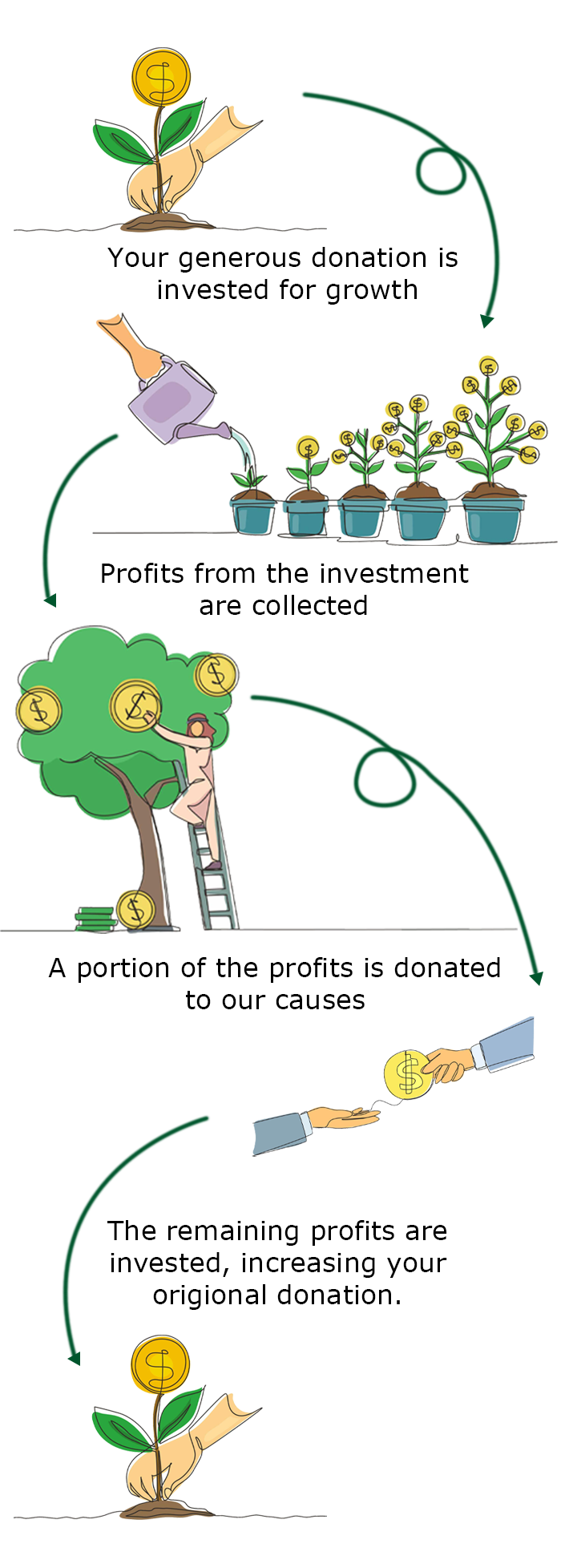
With 100% Plus, every penny of your donation remains intact—forever. Instead of being spent, your contribution is carefully invested in Sharia-compliant ventures, generating returns that are reinvested to grow your original donation. This means your gift doesn’t just make an impact today—it keeps expanding, creating an ever-increasing source of support for charitable causes. Your generosity becomes a perpetual cycle of giving, ensuring lasting rewards for both you and the communities you help.
100% Plus – A Donation That Never Stops Giving

Waqf is deeply rooted in the principles of charity and social justice in Islam. It is considered a form of sadaqah jariyah, or ongoing charity, meaning that the benefits continue to flow to others long after the initial contribution. It is one of the most impactful ways to help build a thriving society, as it supports education, healthcare, infrastructure, and poverty alleviation.
The importance of WAQF in Islam:

Waqf is deeply rooted in the principles of charity and social justice in Islam. It is considered a form of sadaqah jariyah, or ongoing charity, meaning that the benefits continue to flow to others long after the initial contribution. It is one of the most impactful ways to help build a thriving society, as it supports education, healthcare, infrastructure, and poverty alleviation.
The importance of WAQF in Islam:
The History of WAQF
622 CE - The First Waqf
The Prophet Muhammad ﷺ established the first Waqf in Madinah, dedicating a palm grove for the poor.
650 CE – The Well of Uthman
Uthman ibn Affan (رضي الله عنه) purchased a well and declared it Waqf for public use.
7th Century – Masjid al-Nabawi
The Prophet ﷺ declared Masjid al-Nabawi as Waqf, ensuring its continued service.
8th Century – Waqf for Education
The Umayyads and early Abbasids funded schools and libraries through Waqf.
9th Century – Hospitals and Healthcare
The first Islamic hospitals were funded through Waqf, providing free medical care.
11th Century – Al-Qarawiyyin University
Fatima al-Fihri founded Al-Qarawiyyin University, the world’s oldest, through Waqf.
12th Century – Waqf for Infrastructure
Waqf-funded roads and water sources helped trade and development.
13th Century – Mamluk Waqf
The Mamluk Sultanate institutionalized Waqf for public welfare.
15th Century – Ottoman Expansion
The Ottomans expanded Waqf to fund mosques, hospitals, and schools.
19th Century – Colonial Challenges
Colonial powers disrupted Waqf, yet it persisted in various forms.
20th-21st Century – Modern Waqf
Countries like Malaysia and Turkey revived Waqf for social projects.

FAQ’s
-
Waqf is an Islamic endowment where assets like money or property are donated for charitable causes. These donations are managed in a way that ensures they generate income, which is used to support ongoing social, educational, and religious initiatives.
-
We maintain transparency by publishing annual reports detailing the use of donations, financial activities, and the impact of our funded projects. Our investment and grant distribution processes are open to scrutiny to build trust with our supporters.
-
UKWAQF provides grants to UK-based projects that positively impact the Muslim community. Eligible projects can apply for funding of up to £10,000, with potential for higher grants in exceptional cases. Visit our "Grant Opportunities" page for more details.
-
Grants up to £10,000 are available, with a cap of 20% of your organization's annual income. In exceptional cases, grants can be increased up to £25,000. Funding is awarded based on the merits and potential impact of your project.
-
Grant applications are typically reviewed within 4-6 weeks, depending on the complexity of the project. We encourage you to apply early and provide as much detail as possible in your application to expedite the process.
-
Yes, organizations can apply for multiple grants, but each application will be evaluated on its own merits. We aim to support projects that will have the most meaningful and lasting impact in line with our mission.
-
Our Investment Committee oversees the allocation of funds into Sharia-compliant, income-generating assets. They ensure that all investments align with Islamic principles and that the funds generate sustainable income to support our charitable projects.
-
Donations to UKWAQF are invested in Sharia-compliant assets that generate ongoing income. If a donation isn't immediately needed, it is safely managed and preserved to grow, ensuring that it is used effectively for long-term impact.
-
Donations to UKWAQF may be eligible for tax relief under UK charity regulations. Please consult with a tax professional to understand the specific benefits available to you based on your individual circumstances.